What Is THCa? The Raw Cannabinoid Behind Your Flower's THC
THCa is the raw, non-intoxicating form of THC found in fresh cannabis. On its own, it won't get you high. It only becomes the THC people are after once heat is applied — when you light a joint, hit a vape, or bake it into an edible.
That single fact explains a lot of small mysteries: why eating raw flower doesn't do much, why your flower label leads with a "THCa" number, and why "THCa flower" sold online is marketed as legal hemp. This guide walks through what THCa actually is, how it converts into THC, and what those label percentages really mean — using a real lab report from flower we carry.
What is THCa?
THCa, or tetrahydrocannabinolic acid, is the acidic compound that a living cannabis plant actually produces. Here's the part that surprises people: the plant doesn't make much THC at all. It makes THCa. Inside the growing plant, an enzyme called THCa synthase builds THCa from an earlier compound (CBGA), and that THCa sits in the flower until something converts it.
Raw cannabis is full of these acidic cannabinoids, not their "active" versions. You can see it on a real lab report. A recent test of our Wedding Cake flower showed not just THCa, but also THCVA and CBGA — all acid forms — sitting alongside only a trace of already-converted delta-9 THC. That's the natural state of fresh flower: loaded with potential, not yet activated.
In its raw, acidic form, THCa is non-intoxicating. It doesn't produce the head high cannabis is known for. To understand why, it helps to put it next to THC.
THCa vs. THC: what's actually different?
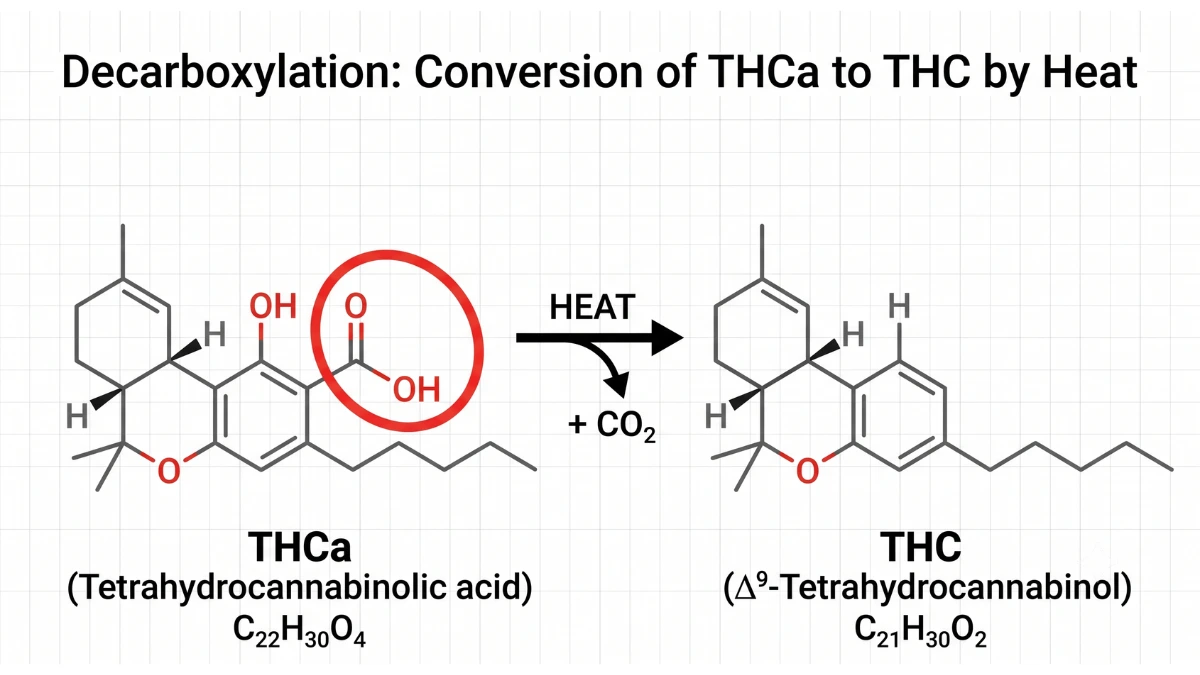
THCa and THC are nearly identical molecules. The difference is one part: THCa carries an extra carboxyl group (a cluster of carbon, oxygen, and hydrogen) that THC doesn't have.
That small addition changes the shape and size of the molecule, and shape is everything here. The "high" from cannabis happens when THC fits into CB1 receptors in your brain — part of your endocannabinoid system. THC slots into those receptors cleanly. THCa, with its extra group and bulkier shape, doesn't fit them the same way, so it doesn't trigger the same intoxicating response. Same origin, one structural difference, completely different experience.
People also search for "THCa vs. delta-9." Delta-9 THC is simply the specific, technical name for the main THC in cannabis — so "THCa vs. THC" and "THCa vs. delta-9" are really asking the same question. THCa is the raw precursor; delta-9 THC is the activated, intoxicating result.
THCa is one of dozens of compounds in the plant. If you want the bigger picture of how these fit together, see our guides to major vs. minor cannabinoids and THC vs. CBD.
Does THCa get you high?
Not in its raw form. If you ate a piece of fresh, unheated flower, you would not feel the typical cannabis high, because the THCa hasn't been converted to THC yet. This is exactly why people who juice raw cannabis leaves or eat raw flower don't report feeling intoxicated the way they would after smoking.
So the honest answer to "if I eat raw flower, will I still get high?" is no — not the way you're expecting. Raw flower is mostly THCa, and THCa needs to be activated first. Without heat (or a lot of time), it stays in its non-intoxicating form. The next section covers how that activation works.
How THCa turns into THC
The conversion is called decarboxylation — heat, light, or time removing that extra carboxyl group and leaving behind THC. It happens automatically every time you use cannabis the usual ways: smoking and vaping apply heat instantly, and baking flower into an edible decarbs it in the oven.
That's the short version. For the full breakdown of temperatures, timing, and how to decarb at home, see our dedicated guide to decarboxylation.
Why your flower label says THCa, not THC
This is one of the most common questions budtenders get: why does the label lead with a THCa number instead of THC?
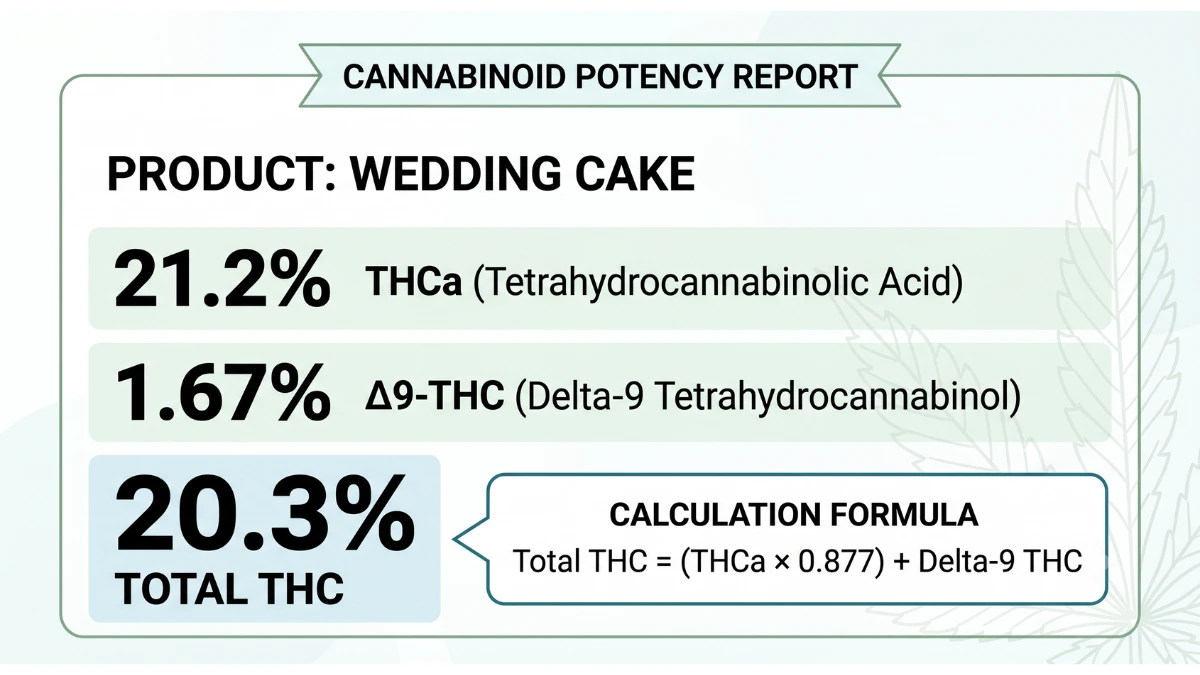
Because the lab is measuring the flower as it sits in the jar — raw and unheated — where THCa is the dominant compound and very little THC has formed yet. Look at the real numbers from that Wedding Cake test:
THCa: 21.2%
Delta-9 THC: 1.67%
Total THC: 20.3%
At a glance that looks contradictory. How is "Total THC" lower than the THCa figure? The answer is a conversion factor: 0.877.
When THCa decarboxylates, it sheds that carboxyl group as carbon dioxide. Carbon dioxide has weight, so the THC left behind weighs about 87.7% of the THCa you started with. To estimate the most THC a flower can deliver, labs use this formula:
Total THC = (THCa × 0.877) + delta-9 THC
Run the Wedding Cake numbers and it lines up exactly: 21.2 × 0.877 = 18.6, plus the 1.67 already there, equals about 20.3%. That "Total THC" figure is the realistic ceiling — what you'd get if every bit of THCa converted perfectly.
The practical takeaway: a "21% THCa" label doesn't mean 21% of the bag is active, ready-to-feel THC. It means the flower has the potential to deliver roughly 20% THC once you heat it. Knowing that one number — and where it comes from — makes every menu in the store easier to read.